OTC vs prescription rosacea treatment: when to upgrade
Drugstore actives have real evidence - and real limits. Here is the honest line between what OTC can do and when it's time for a prescription.
Editorial Team · June 5, 2026 · 9 min read
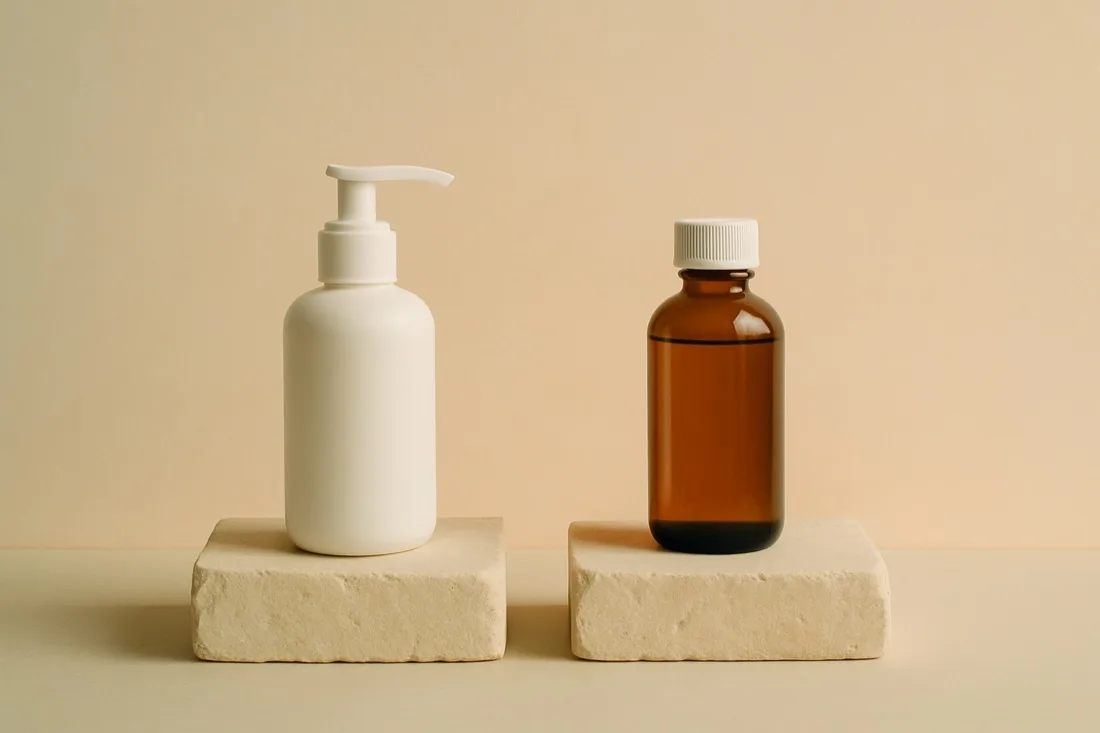
What OTC can genuinely do
The over-the-counter rungs are not placebo. A gentle barrier routine measurably improves treatment outcomes, azelaic acid 10% carries real evidence for mild inflammatory rosacea, and niacinamide supports the barrier. For mild redness and the occasional bump, many people stay on these rungs indefinitely - and should.
Where OTC stops
- Persistent papules and pustules that keep returning despite 8–12 weeks of consistent OTC care.
- Redness and visible vessels - no OTC product meaningfully treats background erythema or telangiectasia.
- Eye involvement - gritty, bloodshot, recurring styes need a clinician, not a serum.
- Anything worsening fast. Escalating early beats months of slow failure.
What prescriptions add
Prescription topicals are FDA-approved specifically for rosacea's inflammatory lesions: azelaic acid 15% gel (Finacea) for the papules and pustules of mild-to-moderate rosacea, metronidazole, and ivermectin 1% cream (Soolantra) for inflammatory lesions. For more stubborn cases there is low-dose oral doxycycline 40 mg (Oracea) - an anti-inflammatory dose, below the antibiotic threshold. Cochrane's systematic review rates the evidence for azelaic acid, ivermectin, and doxycycline as moderate-to-high quality. Redness-specific prescriptions also exist and deserve a dedicated conversation with a clinician about trade-offs.
The honest upgrade rule
- Give any new step 8–12 weeks of consistent use before judging it - rosacea actives are slow.
- If bumps persist after that window, a prescription topical is the evidence-backed next rung, not a stronger OTC acid.
- Telehealth makes the upgrade cheap and fast: a dermatology review online costs less than most people spend on failed OTC experiments.
- Skin thickening or eye complications skip the ladder entirely - in-person care, promptly.
Last reviewed June 5, 2026
This is the treatment ladder in miniature - OTC fills the lower rungs, prescriptions take over above them. See the ladder →Related on RosaceaClub
Frequently asked questions
How long should I try OTC treatment before upgrading?
8–12 weeks of consistent use. Rosacea actives are slow - but if bumps persist after that window, a prescription topical is the evidence-backed next step, not a stronger drugstore acid.
What can't OTC products treat?
Background redness and visible blood vessels - no OTC product meaningfully treats those. Eye involvement also needs a clinician. OTC's real territory is barrier care and mild inflammatory bumps.
Is low-dose doxycycline the same as taking antibiotics?
Not quite. Oracea's 40 mg dose is anti-inflammatory - below the antimicrobial threshold - which is exactly why it's FDA-approved for long-term rosacea use rather than as an infection treatment.
Do I need an in-person visit for a rosacea prescription?
Usually not for topicals and oral doxycycline - telehealth covers those well and often costs less than a string of failed OTC experiments. Skin thickening and eye complications are the exceptions: those need in-person care.
Keep reading

Get the one-page cheatsheet
AM/PM routine, the ingredient avoid-list, and product picks per subtype - emailed to you.
- No spam, unsubscribe anytime
- We never sell email lists